 SulitFinds
Budget Power Banks for Daily Carry in the Philippines
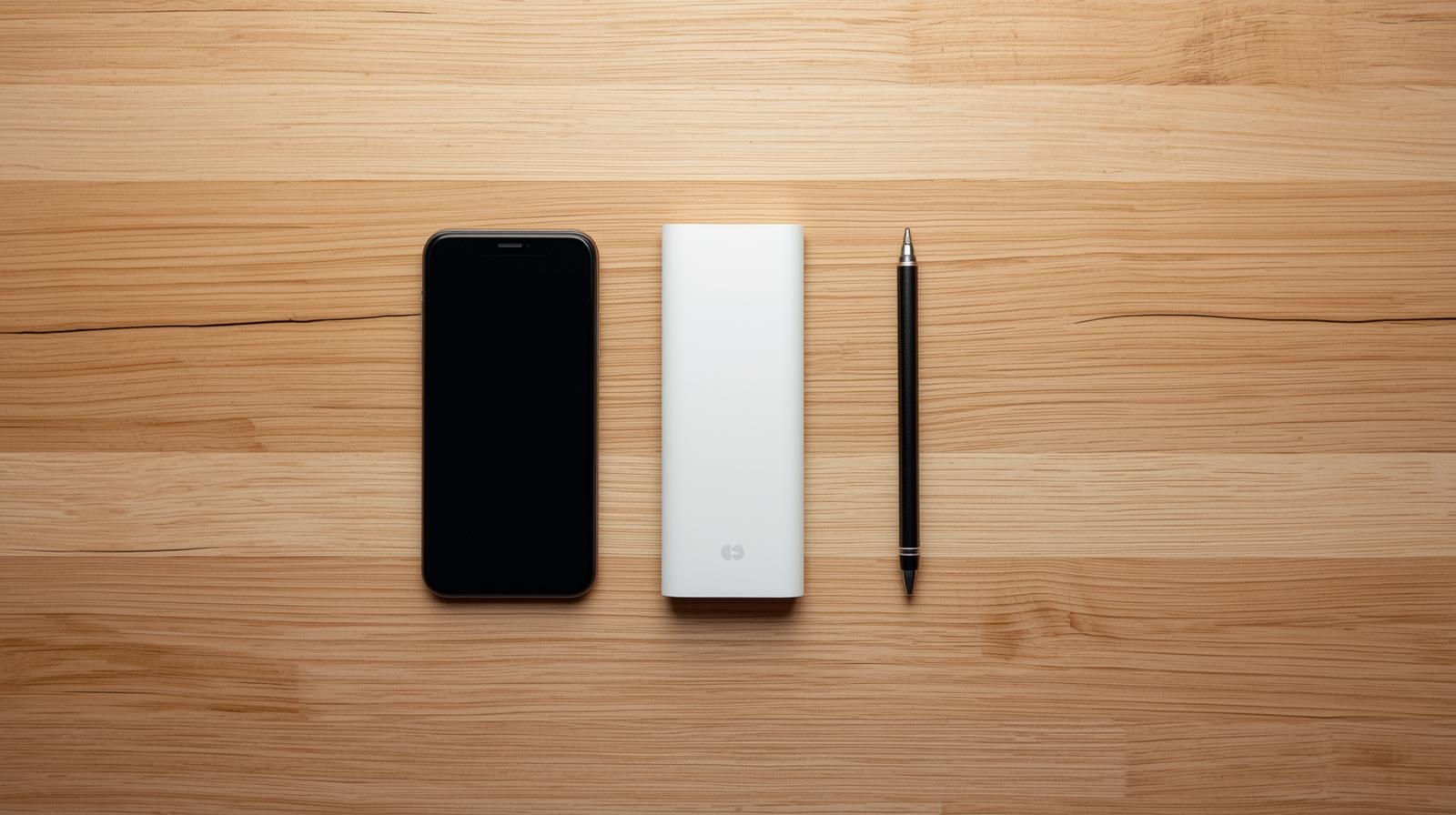
A practical power bank buying guide for Filipino commuters with capacity math, charge-speed checks, and daily-use reliability tips.
Written by SulitFinds Editorial Team
We prioritize practical local context and reader-first recommendations. See how we research and review content.
Most power bank disappointment comes from mismatched expectations. A unit can have a big mAh label but still feel slow, heavy, or inconvenient for daily carry. To avoid waste, choose based on your actual charging pattern and commute behavior.
This guide focuses on practical selection for daily Filipino commuting and school/work routines.
Step 1: Estimate your real daily charging demand
Use this formula:
- Required capacity = phone battery size x target charges x 1.35
The 1.35 factor accounts for conversion losses and heat.
Example A
- Phone battery: 4,500mAh
- Target: 1.5 charges
- Required minimum: 4,500 x 1.5 x 1.35 = about 9,112mAh
Example B
- Phone battery: 5,000mAh
- Target: 2.0 charges
- Required minimum: 5,000 x 2.0 x 1.35 = about 13,500mAh
For many commuters, 10,000mAh is a practical baseline. Heavy users may need higher capacity at the cost of weight.
Step 2: Match output speed to your charging windows
Capacity is not enough. Speed matters when you only have short breaks.
Check:
- Output rating per port
- Fast-charge protocol support (if relevant to your phone)
- Cable quality and connector compatibility
A slower unit may be acceptable for long office stays, but less useful for quick commute top-ups.
Step 3: Plan for carry comfort
If a power bank feels too heavy, you will leave it at home.
- Daily-carry sweet spot is usually slim 10,000mAh models
- Mini units are useful as emergency backup
- Oversized units are better for travel or multi-device scenarios
Choose for consistent use, not best-case scenarios only.
Step 4: Evaluate port and cable workflow
- Do you need USB-C, USB-A, or both?
- Do you rely on built-in cable convenience?
- Do you carry multiple devices daily?
A clean cable workflow often matters as much as capacity in real life.
Three practical picks
1) Main daily power option
Why it made the shortlist:
- Useful balance between portability and capacity.
- Suitable for regular all-day carry.
- Practical default for many students and commuters.
Check before checkout:
- Real-user feedback on charging consistency.
- Connector support for your device ecosystem.
2) Compact emergency backup unit
Why it made the shortlist:
- Pocket-sized emergency top-up tool.
- Easy secondary backup for minimal bags.
- Good fit for users who only need rescue charging.
Check before checkout:
- Exact port type compatibility.
- Realistic expectation of partial-charge support.
3) Accessory management companion
Why it made the shortlist:
- Keeps cables and adapters sorted with the power bank.
- Reduces connector wear from loose storage.
- Improves speed during charging situations.
Check before checkout:
- Interior fit for your charger and cables.
- Zip durability for daily open/close cycles.
Battery health habits that matter
- Avoid prolonged high-heat exposure (sun-heated bags or dashboards)
- Do not leave at 0% for long periods repeatedly
- Use stable cables and avoid damaged connectors
- Charge and store in ventilated conditions
These habits can improve performance consistency over time.
Commute-specific usage pattern
Recommended pattern for heavy users:
- Morning: start with full phone and full power bank
- Midday: one controlled top-up during break
- Evening: avoid draining power bank to zero if possible
Predictable charging routines reduce battery stress and anxiety.
Airline and travel note
When traveling, check current airline carry-on rules for power banks before departure. Requirements can vary by carrier and route.
Common buying mistakes
- Buying based on mAh label only
- Ignoring weight and carry inconvenience
- Choosing cheapest listing with poor long-term reviews
- No backup cable plan
A balanced setup is usually better than a max-spec setup you rarely carry.
How to validate a listing before checkout
Two similar listings can have very different real-world outcomes. Use this quick filter before you buy:
- Seller quality: prioritize stores with stable ratings, clear after-sales policy, and consistent recent activity.
- Review pattern: scan 1-star to 3-star feedback first to see repeated failures, then confirm with positive reviews.
- Review photos: look for actual delivered item photos, not only marketing images.
- Spec consistency: avoid listings with conflicting capacity, wattage, or port details across title and description.
- Return practicality: check if return/refund process is realistic for your location.
If details are vague, treat the listing as high risk even if the price is attractive.
7-day reliability test after delivery
Use the first week to confirm the unit is good enough for daily carry:
- Full-charge baseline: charge the power bank to 100% and note charging time.
- Single-device test: charge your phone from 20% to 80% and monitor heat.
- Multi-session test: repeat short top-ups across a normal commute day.
- Cable stability check: confirm the connection does not drop when the cable moves in a bag.
- Idle drain check: leave it unused overnight and see if the battery percentage drops unusually fast.
- Port check: test each output port you plan to use.
If it overheats quickly or behaves inconsistently in these tests, request support while your return window is active.
Replace or keep: practical decision rule
Consider replacing your daily power bank when at least two of these are true:
- You can no longer finish one normal day without emergency low-battery moments.
- Charging speed feels noticeably slower than when the unit was new.
- It gets hotter than usual under normal load.
- Port connection is loose or intermittent.
If only cables are failing, replace cables first before buying a new power bank. In many setups, cable quality is the cheaper high-impact fix.
FAQ
Is 10,000mAh enough for most daily users?
Often yes, depending on phone battery size and usage intensity.
Should I rely on mini power banks only?
Mini units are best as backup, not primary for heavy daily use.
Why do charging results differ from capacity labels?
Energy conversion, voltage changes, and heat losses reduce effective delivered charge.
What fails first in budget power setups?
Often cables and connectors, not just battery cells. Use durable cables and replace worn ones early.
Affiliate disclosure: Some links may be affiliate links. SulitFinds may earn a small commission from qualifying purchases.
Links may lead to Shopee or TikTok Shop listings. Always review seller ratings, product details, and return policies before buying. Purchases are your responsibility. See Disclaimer.